Updated on 02/02/2026
In 2025, the event industry was marked by a strong resurgence of physical and hybrid events. This year, the sector enters a new era. A pivotal year: the global event industry must contend with persistent economic instability, increased budget pressure, and ever-higher expectations, from both the public and companies.
In this context, professional events are no longer a simple expense item: they stand out as a high-value strategic asset, capable of generating return on investment, strengthening engagement, enhancing a brand, and creating memorable experiences.
In 2026, the event becomes a lever for strategy, event communication, marketing, and internal as well as external collaboration. Here are the 10 major event trends to take into account.
1. Artificial intelligence becomes the standard for event platforms
The gimmick AI is over: in 2026, artificial intelligence establishes itself as a genuine event management tool, built into the core of event platforms.
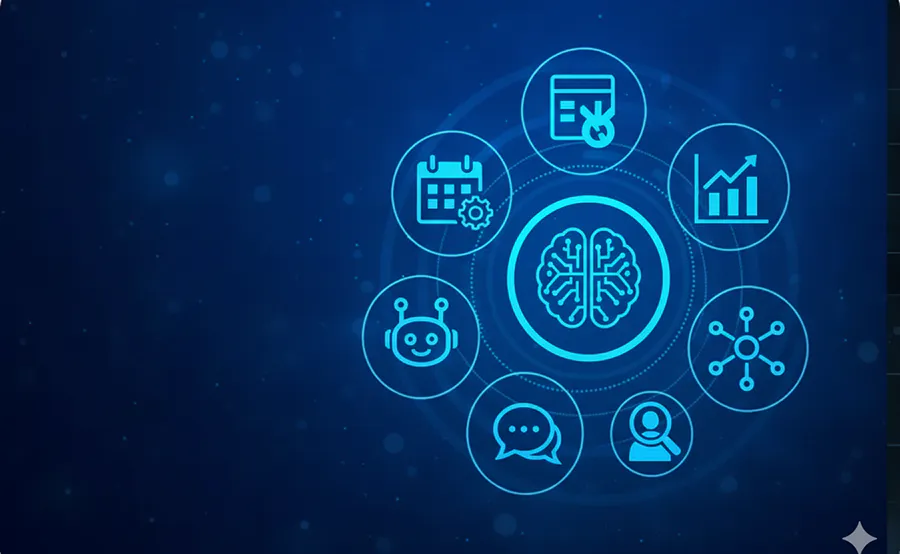
AI acts as an intelligent copilot for the organizer, the team, and the attendee, with concrete use cases:
- Automation of management workflows
- Personalized recommendations based on data
- Smart assistants for organizers and guests
- Predictive analytics in real time
The goal: free up time for the human element, emotion, experience creation, and interaction. This new technology is transforming the way the event industry is designed, managed, and measured, one that has become smarter, more efficient, and more personalized.
2. Hyper-flexible events in an unstable world
Last-minute decisions, budget constraints, shifting formats, logistical uncertainties: 2026 calls for agile, flexible organization.
This hyper-flexibility plays out on three levels:
- Operational: adjustable capacity, modular formats, hybrid or fully in-person journeys and events
- Commercial: modular or à la carte offers, short or long formats
- Organizational: task-force teams, evolving schedules
This approach also helps limit waste and environmental impact by precisely matching resources to actual needs. An opportunity to combine performance, restraint, and sustainability.
3. Data-driven decision-making becomes essential
Another event trend for 2026: the "gut feeling" event no longer has a place. In the event market, a data-driven vision reigns.
Organizers need:
- A 360° view of the user experience
- Centralized data
- Clear reporting for management
Data becomes a lever for analysis, journey optimization, resource allocation, and cost reduction. Thanks to AI, we now talk about event prediction: it's possible to anticipate flow, attendance, peak periods, operational needs (both human and technical), and adjust the organization in advance.
💬 "In a market that's constantly evolving, performance is no longer guessed, it's measured. The events that make an impression on attendees are the ones that combine personalization, interaction, and meaning. That's why an event platform becomes an absolute must-have: it combines data centralization and collaboration to create memorable experiences, for the public and for the teams alike.", Joy Grand, Marketing Manager at Digitevent
4. Event ROI under constant scrutiny
In 2026, with tightly controlled budgets, every event must prove its role and value. ROI becomes a continuously tracked indicator, before, during, and after the event.
KPIs are no longer limited to attendance, you also need to take into account:
- Audience engagement
- Lead generation
- Impact on brand awareness
- Sales performance post-event
This is where the dashboards of an event solution like Digitevent truly come into their own: by offering a clear, actionable, real-time measurement of the data that lets you calculate your return on investment.
5. Digital security becomes a selection criterion
The rise in cyber threats makes digital security a major issue for the event industry.
Companies expect from their providers:
- Secure hosting
- Access governance
- Traceability of actions
- Recognized certifications
Beyond the technical aspect, cybersecurity becomes a matter of trust, reputation, and customer engagement.
6. Physical security at events is on the rise
According to customer relations specialist Thierry Spencer, in 2026, customers are anxious and in search of reassurance. That's why physical security becomes a fully-fledged component of the attendee experience.
New practices and innovations are therefore emerging, such as:
- Crowd modeling
- Anticipating risk zones
- AI-assisted monitoring (density, flow, tension zones)
Whether it's a congress, a conference, an evening event, a seminar, or a public event, security directly contributes to delivering a smooth, calm, and memorable experience for attendees.
7. The event becomes a content machine
The event is no longer an isolated moment. It becomes a fully-fledged media channel, generating content before, during, and after.
The formats used are many and varied:
- Live videos and replays
- Short clips for social media
- AI-assisted summaries
- Immersive and interactive formats
The result: increased visibility, ROI extended over time, and stronger alignment between communications, marketing, and sales.
8. Immersive, interactive experiences to bring attendees on board
Still according to Thierry Spencer, the customer must be "brought on board" in 2026. They no longer want to attend: they want to interact, choose, contribute. The immersive experience becomes central. In short, they want to be treated as an active participant in the companies they buy from (and therefore, in their events).
Hence why the immersive experience becomes central to events, for example through:
- Collaborative mobile apps
- Gamification
- Interactive journeys for a personalized experience
These immersive formats transform the tailored experience, strengthen emotion, and boost memorability.
9. Eco-responsibility becomes the norm
In 2026, sustainability is no longer a differentiating argument: it's a prerequisite, almost a standard. We're moving from a 2025 where event providers and venues declared their CSR commitment, to a 2026 where they're asked for concrete proof.
Companies expect, among other things:
- Measurable indicators
- A reduction in carbon footprint
- Responsible use of materials
- Concrete CSR commitments
Need concrete ideas to follow this 2026 event trend? Discover 12 concrete actions to implement for an eco-responsible event.
10. Well-being and the quality of interactions as performance levers
In 2026, the place of well-being in events is growing, and becoming a performance lever.
Organizers are paying closer attention to:
- Attendee well-being, for example through quiet zones planned into the venue layout
- Production team well-being, thanks to more realistic schedules, or better anticipation of workload
What's more, community-building events are in vogue. Tighter formats (such as workshops, micro-conferences, or highly targeted themed tracks) help foster quality interactions and build a genuine community. We're also seeing the rise of informal moments for networking and developing natural interactions. Everything needed to deliver a human, engaging, and lasting experience.
And to follow this 2026 event trend, nothing beats deploying an event app like Digitevent's: it lets you create personalized journeys for each attendee, as well as small-group sessions.
Supporting you through these 2026 event trends
In light of these major event trends, Digitevent supports organizers in creating smart, flexible, secure, and responsible events.
From registration management to post-event analysis, including the attendee experience and ROI measurement, Digitevent stands out as a key partner in your 2026 event strategy.
Request a demo now, and discover how to transform your events into genuine performance levers.