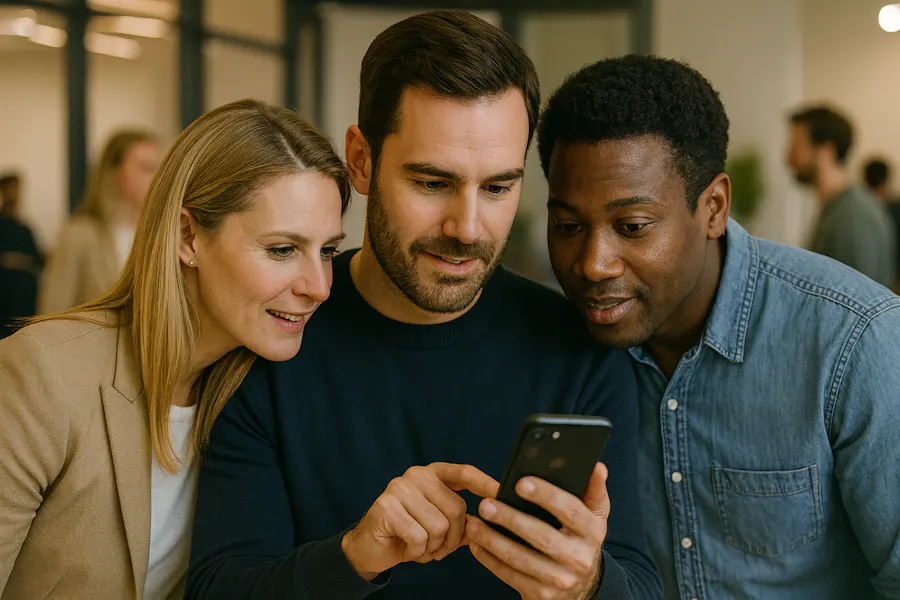
Meeting the right people at the right time has become a strong, even essential, expectation at B2B events.
In fact, according to a 2024 study by the platform Goodfirms, 91% of professionals consider networking the top reason for attending a B2B event.
In this context, event matchmaking changes the game: it structures encounters, connects the right profiles, and maximizes the value of exchanges for all visitors, exhibitors, and organizers.
In this article, discover how matchmaking works, why it has become an essential lever, and how to integrate it effectively into your event strategy.
What is event matchmaking?
Definition and principle
Event matchmaking is a process of targeted connection between participants. Unlike spontaneous or informal networking, it relies on a prior analysis of profiles, needs, and objectives of participants.
Its goal? To enable meetings that are useful, planned, and aligned with everyone's expectations.
Matchmaking can be automated through a digital platform or assisted by algorithms and a human coordination team.
Networking vs. Matchmaking
Traditional networking relies on informal encounters and leaves a lot of room for chance.
Event matchmaking, on the other hand, structures interactions by connecting participants according to precise criteria and shared objectives. It prevents untargeted exchanges and random cold approaches. The result? More effective interactions, and a better experience for everyone.
Five criteria help measure what event matchmaking really changes, compared to traditional networking:
- Type of interaction: informal and unplanned for networking, versus based on profiles and objectives for matchmaking
- Efficiency: random on one side, tailored and focused on the value of meetings on the other
- Experience: general and not very personalized for networking, optimized through filters for matchmaking
- No-show rate: high for networking, reduced thanks to commitment to fixed time slots for matchmaking
- Associated tools: no tool for networking, a digital platform with an integrated calendar for matchmaking
A concept enriched by data and technology
The rise of event platforms has made matchmaking more accessible, smoother, and automated. Smart algorithms can even anticipate useful connections without any action from the user. These tools also offer dashboards to track the number of meeting requests, acceptance rates, and no-show rates.
For which types of events?
Matchmaking adapts to various professional formats:
- B2B trade shows
- Business congresses and forums
- Internal corporate events
Why integrate matchmaking into your events?
For participants
Matchmaking addresses a growing need for efficient use of time spent at an event. Your visitors or attendees no longer just want to "attend", they want to experience something personalized and useful. Matchmaking offers several benefits to your participants:
- Targeted meetings: appointments are aligned with their professional objectives (prospecting, recruitment, collaboration, etc.).
- Time savings: your participants no longer have to "hunt" for the right contacts on-site.
- An enhanced journey: each user benefits from an experience built around their needs.
- A sense of efficiency: concrete results (useful contacts, partnerships initiated, etc.) reinforce overall satisfaction with the event.
Matchmaking also helps drastically reduce the no-show rate at an event: a scheduled meeting encourages attendance. Ideal for remote or international participants, it makes it easier to connect in advance and optimize travel or connection.
For exhibitors
At your B2B trade shows, exhibitors invest to meet qualified prospects, not to hand out brochures. Integrating a matchmaking system allows them to:
- Target the right visitors and secure scheduled meetings in advance.
- Improve the conversion rate: fewer visitors, but higher-quality leads.
- Increase their ROI and, in turn, justify the investment in a booth or partnership through tangible KPIs.
- Strengthen the engagement of sponsors.
Some setups also allow you to associate partner brands with matchmaking tools (branding, sponsored filters, highlighting in recommendations, etc.).
For organizers
As a strategic lever for an event's success, event matchmaking translates into concrete benefits for you:
- A competitive edge: offering a qualified meeting service positions your event as premium or innovative.
- Better satisfaction and attendee engagement : both visitors and exhibitors experience a higher perceived value.
- An optimized business model: your trade shows become even more profitable thanks to an added offering that gives exhibitors a dedicated calendar for booking meetings.
- Valuable collected data: you gain visibility into the number of meetings proposed, accepted, or the attendance rate at appointments.
Increased prestige and loyalty: effective matchmaking encourages your participants to return and recommend the event.
How does it actually work?
Beforehand:
Participants fill out an enriched registration form, specifying their role, industry, expectations, and the profiles they want to meet.
This information feeds a search engine or matchmaking algorithm, making it possible to create filterable, usable profiles in a directory-style interface.
But that's not all: each participant receives targeted meeting suggestions based on the information provided and the matchmaking rules set by the organizer.
They can manage their meeting schedule directly from the app or the web platform, with time slots visible and adjustable according to their availability.
During the event:
Participants track their personal meeting schedules directly from the event app. They can directly report no-shows to the organizer.
Meetings take place in dedicated spaces, identified at the event venue, or via video links if the event is online or hybrid.
After the event:
Contacts made can be retrieved by participants via an Excel export. The organizer can leverage performance data such as the number of meetings held, the attendance rate, or satisfaction feedback to measure the effectiveness of the system and improve future editions.
How can you set up an effective meeting system?
Identify your audience
Start by segmenting your participants: exhibitors, buyers, partners, candidates, etc. Then collect key information at registration: objectives, interests, availability. This data will allow you to offer relevant, personalized meetings.
Rely on a suitable platform
Use an event tool like Digitevent to manage the entire process, incorporating these key features:
- Meeting requests (subject to the recipient's acceptance or automatically accepted).
- Quotas for confirmed meetings and pending requests
- Management of unavailability and "no-shows"
- Calendar synchronization
- Automatic assignment to tables, meeting spaces, or video conference rooms
- Integration of calendars, video calls, or physical meeting points
Create separate sessions based on audiences or formats, whether in-person or remote.
Set clear rules
Establish who can meet whom (for example: students can meet recruiters, and suppliers can meet buyers).
These rules will help you avoid poor connections and streamline interactions.
Encourage participation
Beforehand, clearly inform participants about the meeting process using emails, tutorials, and videos. Don't forget to showcase the attendee directory with useful filters (company, industry, etc.), and plan dedicated spaces or time slots for meetings.
Track and optimize
Analyze the results by looking at the number of meetings booked, the attendance rate, and any no-shows observed. You can use exports and dashboards to refine your setup and identify areas for improvement. Finally, use this data to showcase the event's value to your partners and optimize the organization of future editions.
5 best practices to optimize matchmaking
1. Focus on the quality of participant profiles
Encourage participants to complete their profile with precise information: role, objectives, industry, etc. The richer the profile, the more relevant the matchmaking will be.
Don't hesitate to make certain fields mandatory at registration.
2. Define relevant matchmaking rules
Frame meeting possibilities by segment (for example: buyers ↔ suppliers) and avoid irrelevant requests by limiting unnecessary crossovers. This structure improves the flow and quality of interactions.
3. Integrate matchmaking into the overall experience
Plan dedicated time slots in the event schedule and remember to set up quiet, clearly identifiable spaces for meetings. Don't forget that matchmaking needs to be visible and easily accessible in the event's app or website.
4. Plan automated reminders and follow-ups
Set up smart notifications such as meeting confirmations, reminders, and follow-ups if a slot is empty. Emails or texts help you maintain a good attendance rate and avoid no-shows.
5. Measure results to improve
Track the key KPIs: number of requests sent, confirmation rate, no-show rate, satisfaction. Then use the platform's exports and reports to adjust settings for future editions. Finally, incorporate participant feedback to enrich the experience with each iteration.
💬 Advice from the Digitevent expert:
"The secret to building matchmaking that makes sense is taking the time to truly understand your participants from the moment they register. By focusing on listening, agility, and real personalization, you grow the value of every meeting and the impact of your event.", Rémi Fontaine, Head of Customer Success at Digitevent
Event matchmaking is no longer a gimmick: it gives meaning to every meeting, structures schedules, and maximizes the perceived value of your events.
Want to stand out at your next events?
Discover Digitevent's smart meeting features and turn your participants' meetings into concrete opportunities.